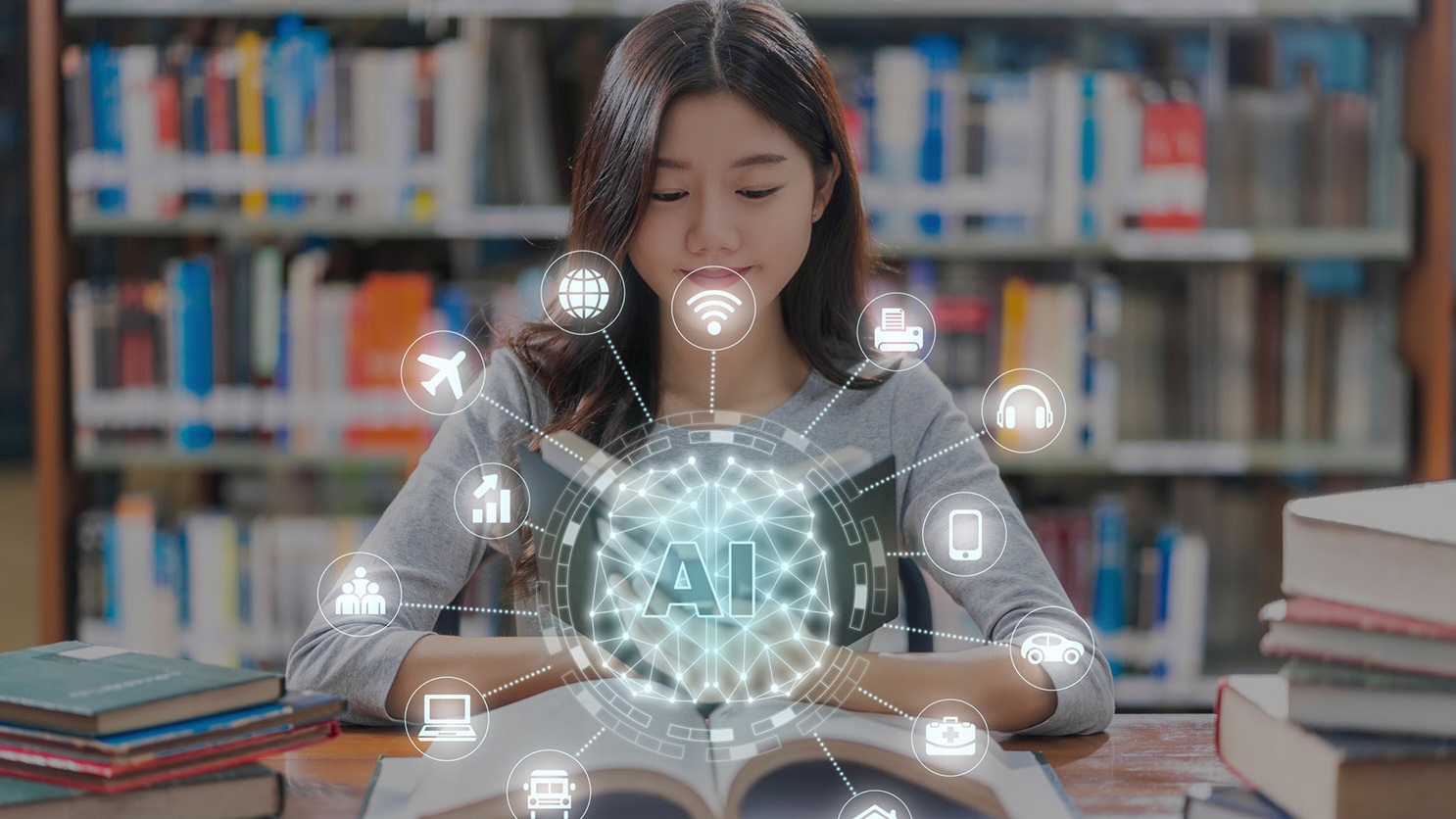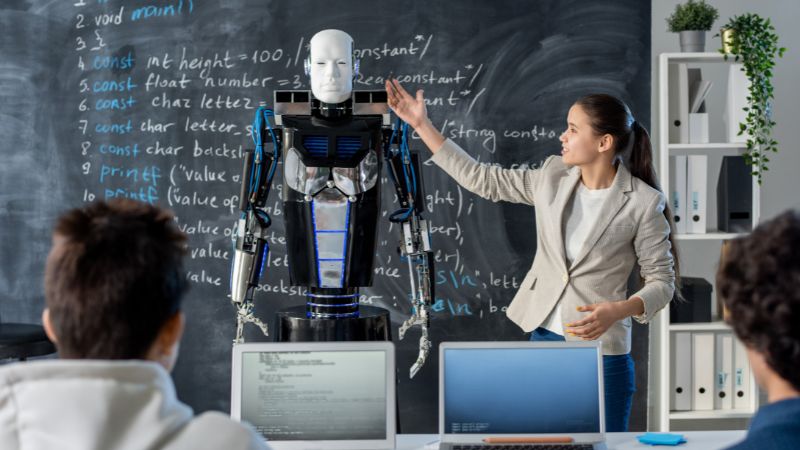
The rapid advancement of Artificial Intelligence (AI) technology is becoming increasingly prevalent in the field of education. AI tools such as ChatGPT and Copilot are now widely used by students to complete assignments, search for information, and write reports. While these technologies have the potential to enhance learning, the growing trend of students relying entirely on AI without understanding the content it generates is becoming a cause for concern. Such dependency may hinder the development of essential soft skills that are crucial for both life and career success.
One of the main issues is that students are using AI not as a learning support tool, but rather as a “work-completion machine.” They simply enter instructions or questions into AI, obtain the answers, and then copy and paste the content directly into their assignments without making any modifications or attempting to understand the material. This behavior not only reflects an excessive dependence on technology but also undermines the development of critical thinking skills that should naturally emerge through the learning process.
When students make no effort to understand the content of their assignments, they lose valuable opportunities to learn how to analyze, evaluate, and organize information independently. Assignments become a purely mechanical process rather than a meaningful learning experience that builds knowledge and skills.
Even more concerning is that this mindset often extends into the classroom. During face-to-face or online learning sessions, students increasingly seek immediate answers from AI for every exercise or activity assigned by their lecturers. As a result, they are less likely to think actively, engage in discussions with classmates, or pay close attention to instructors’ explanations.
When students rely solely on AI to answer all questions, they miss opportunities to develop Higher-Order Thinking Skills (HOTS), such as problem-solving, decision-making, and evaluating different perspectives. Classroom activities that should encourage interaction and intellectual engagement become passive and less meaningful.
The use of AI is particularly evident in assignments such as reports, presentation slides, and project proposals. Students simply provide brief instructions to AI and receive complete outputs, which they then submit without editing or adapting them to meet assignment requirements or team expectations. This phenomenon not only limits their understanding of the subject matter but also hinders the development of skills such as note-taking, summarizing information, and collaborating with others.
In the context of group work, AI has increasingly replaced interaction among team members. Students no longer discuss ideas, divide responsibilities, or make decisions collectively. Instead, a single group member can complete an entire assignment with the assistance of AI, leaving other members uninvolved. This is particularly detrimental to the development of leadership, effective communication, and accountability.
Educators now face a significant challenge in ensuring that human values remain central to teaching and learning. Soft skills such as work ethics, empathy, and leadership cannot be developed solely through reliance on AI. Therefore, educators must move away from traditional approaches that focus only on final outcomes. Instead, they should adopt more active and reflective methods by guiding students to use AI ethically and by assessing the learning process rather than merely the final product.
This shift requires a change in mindset and the courage to adapt to a rapidly evolving technological landscape. In some cases, rebuilding fundamental skills that have been weakened by excessive AI dependency may require a return to more traditional learning methods.
For example, requiring handwritten assignments can be an effective strategy. By mandating that certain tasks be completed by hand, students are encouraged to read, understand, and rewrite content in their own words. This approach can reduce the tendency to copy and paste information without reflection while helping students learn to reorganize knowledge in a way that is meaningful to them.
In addition, handwritten work can improve writing skills and enhance concentration when reviewing learning materials. Although this approach may seem outdated, in today’s educational environment it may represent a necessary step backward to ensure that students genuinely learn rather than simply complete tasks.
Addressing this issue requires a balanced approach. AI should not be eliminated entirely but should instead be used responsibly. Students should be educated to view AI as an assistant rather than a complete problem-solver. Likewise, educators can design process-based assessments such as presentations, discussions, and reflective assignments to ensure that students truly understand and master the content in depth.
It is undeniable that some students still use AI wisely and responsibly. However, these students are increasingly overshadowed by others who choose the easier path. Without efforts to raise awareness and promote ethical AI usage, we risk losing students who are genuinely engaged in learning.
AI is a remarkable technological achievement, but without proper guidance and control, it can become a double-edged sword. Our responsibility is not to reject technological progress but to ensure that AI is used to empower rather than weaken learners.
Therefore, educators, students, and educational institutions must work together to ensure that soft skills remain a priority in this digital era.
Raihan Zainuddin
Education Service Officer
Centre for Foundation Studies in Science (PASUM)
University of Malaya
Email: raihan.zainudin@um.edu.my
Date of Input: 18/06/2026 | Updated: 18/06/2026 | lailatul
MEDIA SHARING